%2Ffit-in%2F250x250%2Fguide_websites%2F30688%2Fimages%2F1745627243080472788467_122126432366582254_511037405999233555_n-removebg-preview.png&w=1920&q=100)
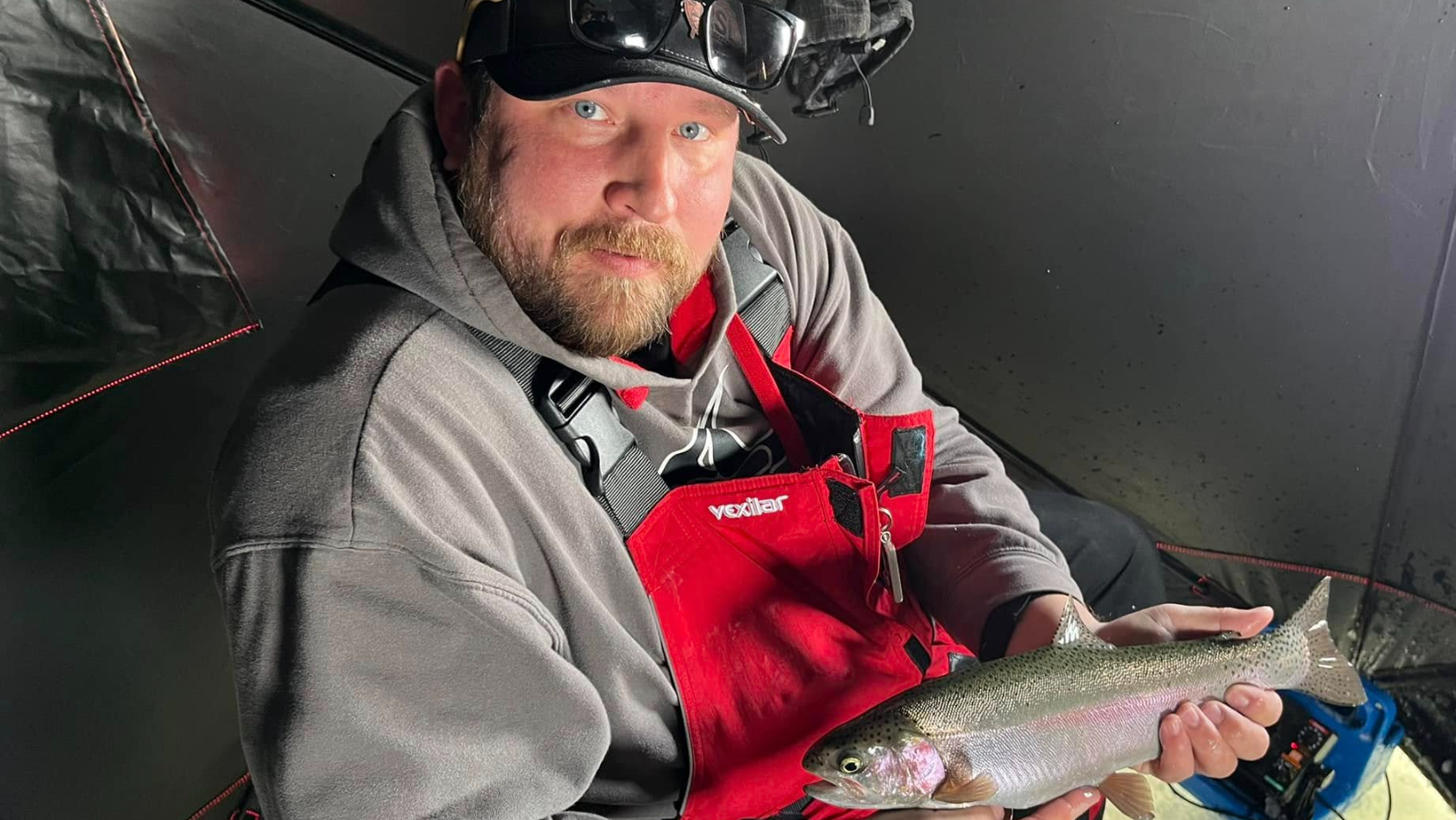
Rainbow Trout Caught in Rifle, Colorado
Rainbow Trout Fishing in Rifle - What to Expect
%2F%2Fusers%2F00c4cc7e-1574-4ced-8601-3c5b4d3ab9c5%2Fimages%2Frainbow-trout-rifle-colorado-fishing-2638.jpg&w=1920&q=75)
Guided Fishing Trip by Guide Jason Shafer in April
Meet your Guide Jason Shafer
- Colorado Scenic Fishing at its Best Spots


Summary
This guided fishing trip in Rifle, Colorado on Friday, April showcases a successful rainbow trout catch. Rainbow trout thrive in Colorado's cold, clear waters, and understanding their behavior and habitat helps anglers connect with this iconic species in its native environment.
Guided Fishing Trip with Jason Shafer - Rates & Booking
Guide Jason Shafer of RSL Guide Services offers guided fishing trips in Rifle, Colorado on Friday, April. This hands-on experience pairs you with local expertise to pursue rainbow trout in their natural habitat. To book your guided fishing adventure and learn current rates, contact RSL Guide Services directly.
Highlights of Your Guided Fishing Experience
Rifle, Colorado sits in prime trout country where cold mountain waters create ideal conditions for rainbow trout. These fish are known for their aggressive strikes and acrobatic jumps, making them a favorite among anglers of all skill levels. The combination of technical skill and natural instinct keeps each cast interesting.
Rainbow trout in Colorado waters exhibit strong feeding behaviors, particularly in spring and fall when water temperatures support peak activity. The visual strikes and responsive nature of these fish provide immediate feedback to anglers, whether you're a beginner learning casting technique or an experienced fisher refining your approach.
Local Species Insights: Rainbow Trout
Rainbow trout are migratory fish that prefer cool, well-oxygenated waters with moderate to fast currents. In Colorado streams and rivers, they occupy areas near structure such as fallen logs, undercut banks, and rocky outcrops where they can ambush food sources. Understanding these habitat preferences helps guide your fly placement and presentation strategy.
These trout are opportunistic feeders that respond to both aquatic insects and small fish. Their coloration, marked by the distinctive red-pink stripe along their sides and rainbow iridescence, serves both as camouflage in dappled light and as breeding display. In Rifle's waters, rainbow trout grow robust due to abundant food sources and favorable conditions.
Rainbow trout behavior changes throughout the day and season. During cooler morning hours, they actively feed in shallower runs and riffles. As water temperature rises, they seek deeper pools and faster currents where cooler water provides comfort. Seasonal variations affect their spawning cycles and feeding intensity, which experienced guides like Jason Shafer understand and use to maximize your success on the water.
The guided approach offers real-time learning as your guide reads water conditions, identifies likely holding areas, and adjusts techniques based on what the fish are telling you. Whether using fly fishing, spin casting, or other methods, the interaction between angler and fish reveals why rainbow trout are so prized in Colorado's fishery.
Fishing in Colorado: Steelhead Trout

Steelhead Trout Overview
Steelhead trout (Oncorhynchus mykiss) belongs to the family Salmonidae and order Salmoniformes, making it a close relative of salmon and other trout species. What makes this fish truly special is its anadromous lifestyle—it spends most of its adult years thriving in the ocean, then returns to freshwater rivers to spawn. Unlike their freshwater cousins, steelhead develop a distinctive streamlined, silvery-brassy appearance with black spots dotting their backs and a striking pinkish-red stripe running from gills to tail. These migratory powerhouses are considered one of North America's most prized game fish, offering anglers an unforgettable challenge and spectacular fight. Whether you're standing in a Pacific Northwest river or exploring coastal watersheds from California to the Great Lakes, encountering a steelhead is a moment many anglers treasure for a lifetime.
Steelhead Trout Habitat and Distribution
Steelhead trout are found in both freshwater and marine environments, making them uniquely adaptable migrants. They occupy cold, clean rivers and streams during their spawning season, using wood, boulders, and dense vegetation as protective cover. These fish are native to the west of the Rocky Mountains, but have been successfully introduced throughout North America and most continents worldwide—the only continent without steelhead is Antarctica. They prefer coastal rivers with strong flows, deep pools, and access to the ocean. In their saltwater phase, steelhead occupy estuaries and coastal waters, fattening up and developing their characteristic dark spots and coloration. When spawning season arrives—typically in fall through spring—they undertake remarkable journeys upstream to gravel beds in tributaries and main river channels, sometimes traveling hundreds of miles from the ocean.
Steelhead Trout Size and Weight
Steelhead trout vary considerably in size depending on their age and time spent in the ocean. The average length typically ranges from 12 to 24 inches, though exceptional specimens regularly reach 30 to 46 inches in length. Weight ranges from around 2 pounds for younger fish up to an impressive 35 pounds for large, ocean-fattened adults. The largest steelhead on record have weighed up to 55 pounds, though such trophy-class fish are rare today. Summer-run steelhead tend to be slightly smaller than winter-run fish, which have spent additional time in the ocean accumulating mass. Most anglers targeting steelhead encounter fish in the 8 to 15-pound range, which still provide tremendous power and athleticism.
Steelhead Trout Diet and Behavior
Steelhead trout are opportunistic feeders with diverse dietary preferences that change throughout their lives. Young steelhead in freshwater primarily feed on zooplankton and small aquatic insects. As they mature and migrate to the ocean, their diet expands significantly to include small fish, crustaceans, mollusks, and fish eggs—essentially anything available in the marine environment. Adult steelhead returning to freshwater to spawn often continue feeding, though their intensity decreases as reproductive instincts dominate. These fish are highly migratory and demonstrate remarkable homing abilities, returning to their natal streams after years at sea. They are active hunters, responsive to moving baits and flies, and display aggressive feeding behavior that makes them so attractive to anglers. Their behavior changes seasonally and even daily, with river conditions, temperature, and time of day significantly influencing their willingness to strike.
Steelhead Trout Spawning and Seasonal Activity
Steelhead trout exhibit one of nature's most fascinating life cycles, marked by dramatic seasonal migrations. Unlike salmon that die after spawning, steelhead can spawn multiple times throughout their 11-year lifespan, sometimes returning to the ocean after reproduction to recharge before attempting to spawn again. The primary spawning season extends from mid-fall through spring, with peak activity typically occurring from late fall through early spring depending on regional populations. During spawning, female steelhead select gravel-bedded areas in freshwater tributaries and streams, where they dig redds (nests) and deposit up to 9,000 eggs, depending on the female's size and body condition. Males fertilize these eggs, and both sexes often become dark and thin as they expend energy on reproduction. After spawning, some steelhead return to the sea to recover; others remain in freshwater. This remarkable cycle makes timing crucial for anglers—understanding whether fish are entering rivers, actively spawning, or dropping back downstream determines success or frustration.
Steelhead Trout Techniques for Observation and Capture
Fly Fishing: Fly fishing for steelhead is the most beloved technique among dedicated anglers and offers an incredibly rewarding experience. Both single-handed and double-handed rods work effectively, though Spey rods and switch rods have become increasingly popular for their superior line control and casting distance. A 13.5-foot 7-weight Spey rod is considered ideal for most steelhead conditions. The two primary methods are wet swinging (where you cast across and downstream, allowing the fly to swing with the current) and stripping. Effective fly patterns include Golden Demon, Skunk, Brad's Brat, Silver Hilton, Purple Peril, and Skykomish Sunrise—typically tied thin and small in sizes #6 to #8. Dry flies like Bombers can work during summer months. Success requires reading water carefully, understanding current speeds, and presenting your fly at the right depth.
Drifting and Plunking: These spin-casting techniques involve moving baits or lures naturally with river currents. Drifting allows you to cover water systematically while plunking positions you in a productive lie, casting and holding position to allow drift. Effective baits include roe (fish eggs), shrimp, and live or dead small fish. These methods are less technical than fly fishing but require strong current-reading skills and knowledge of where steelhead hold. Best practiced during higher water conditions when steelhead are more aggressive and responsive.
Back Trolling: For river systems and estuaries where boat access is available, back trolling—where you motor upstream while trailing lures or baits behind the boat—can be highly productive. This technique covers substantial water and works particularly well during lower-water periods when steelhead concentrate in deeper pools. Around coastal Pacific Northwest rivers and Northern California watersheds, this method ranks among the most effective for connecting with winter-run fish.
Steelhead Trout Culinary and Utilization Notes
Steelhead trout offers excellent culinary value and has earned a strong reputation as a quality food fish. The flesh is rich, firm, and flavorful—often compared favorably to salmon—with a pleasant orange-to-pink color when ocean-fattened. The taste varies slightly depending on whether the fish is in its saltwater phase (firmer, richer flavor) or fresh from the ocean (milder and more delicate). Steelhead are versatile in the kitchen, grilling beautifully whole or filleted, smoking exceptionally well, and providing excellent nutrition including high omega-3 fatty acids and quality protein. Many regions impose harvest restrictions to protect declining wild populations, so anglers should always check local regulations. Farmed steelhead is also commercially available, though wild-caught fish offer superior flavor and environmental credentials. Whether baked, grilled, smoked, or pan-seared, steelhead represents one of North America's finest eating fish when properly prepared.
Steelhead Trout Frequently Asked Questions
Q: What is the best bait or lure for catching steelhead trout?
A: The answer depends on your chosen technique and water conditions. For fly fishing, thin-profile flies in sizes #6-#8 work best—try Golden Demon, Skunk, or Skykomish Sunrise during wet swings, or Bombers for dry-fly presentations. For conventional gear, fresh roe (fish eggs) ranks among the most effective baits, particularly in clear to moderate water. Small spoons, spinners, and plugs also produce excellent results. Winter conditions favor roe and live baitfish, while summer periods sometimes reward anglers with dry-fly presentations.
Q: When is the best time to catch steelhead trout?
A: The prime steelhead season extends from mid-fall through spring, with peak activity occurring during late fall and early winter. Winter-run steelhead typically enter rivers from November through March, while summer-run populations may remain active through summer months. After substantial rainfall that raises river levels, steelhead become more aggressive and move into rivers in greater numbers. Water temperature also matters—steelhead feed most actively when river temperatures fall between 35-50°F. Time of day is less critical than water conditions, though early morning and late afternoon often produce excellent results.
Q: Where can I find steelhead trout near major coastal cities?
A: Steelhead inhabit rivers throughout the Pacific Northwest, Northern California, Great Lakes region, and numerous other coastal watersheds. Productive rivers near major population centers include the Rogue River and Umpqua River in Oregon, the Trinity and Eel Rivers in Northern California, the Skeena and Campbell Rivers in British Columbia, and numerous Michigan and Great Lakes tributaries. Check with local fishing guides, tackle shops, and state wildlife agencies for current conditions and access information specific to your area. Many rivers provide excellent public access and developed fisheries for steelhead enthusiasts.
Q: Is steelhead trout good to eat compared to other fish?
A: Absolutely. Steelhead ranks among North America's finest eating fish, with firm, flavorful flesh that rivals salmon. Ocean-phase fish offer richer flavor and firmer texture than freshwater residents. The meat contains excellent omega-3 fatty acids and quality protein, making it both delicious and nutritious. Preparation methods like grilling whole, smoking, baking with herbs, or pan-searing all yield excellent results. Many chefs specifically seek wild steelhead for its superior taste and texture compared to farmed alternatives.
Q: How do steelhead differ from rainbow trout?
A: Steelhead and rainbow trout are actually the same species (Oncorhynchus mykiss)—the difference lies in lifestyle. Rainbow trout spend their entire lives in freshwater and display vibrant multi-hued coloration with distinct red-to-pink lateral stripes. Steelhead, by contrast, migrate to the ocean for two to three years before returning to freshwater to spawn. This ocean time transforms them into sleek, silvery-brassy fish with numerous black spots covering their backs. The marine environment fattens them considerably, creating the powerful, athletic fish that make steelhead so prized by anglers.
Q: Can steelhead spawn multiple times in their lifetime?
A: Yes, unlike Pacific salmon species that die after spawning, steelhead can return to the ocean after reproduction and spawn multiple times throughout their approximately 11-year lifespan. This remarkable ability allows some fish to attempt spawning 5 or more times during their lives. The physical toll of migration and reproduction is evident in their appearance after spawning—they become darker and thinner—but many recover during their ocean sabbatical and return for another spawning cycle. This unique lifecycle makes steelhead among the most resilient and fascinating anadromous fish in North America.